Showing posts with label Asheville. Show all posts

Tuesday, August 19, 2014

The cages are open...


Los pajaros estan en su lugar
 (The birds are where they belong)


Valladolid is a lovely, provincial town in the Yucatan. I spent a night there about a dozen years ago with a group including several of us from Asheville, some ex-patriot Americans living in Merida and one Meridano. We stayed at a hotel, El Meson del Marques, which has a lovely restaurant surrounding a fountain and garden. Hanging from one wall is a line of empty birdcages and a proverb painted on bamboo (my heading today, above.) Our Meridano friend, Samuel, translated the proverb for those of us whose Spanish was inadequate. The cages are open and the birds are free to choose their place, to choose where they belong.

The proverb struck me since I have spent my life moving from place to place. It's a common issue for the children of the military, "where do I belong?" I have always thought myself fortunate to be raised in the US Coast Guard. Our duty stations have been in extraordinary places including Puerto Rico, Hawaii, Seattle, the San Francisco area (Palo Alto) and after I left home at 18, I have spent extended periods in Germany, Scotland and Vietnam. Whether or not I have felt at home, each place taught me more about who I am and how to adapt.

I am visiting Merida again, and happy to be back in the Yucatan with its dense history and rich culture. By the way, my Spanish still sucks and I hope to change that (learning will help me stave off dementia.)  Merida is the "White City" and the capitol of the state.  I want to use my time here to understand more of the region and to deepen my ability to feel less other in the world.

Merida was founded in 1542 by three conquistadors (each of whom were named Francisco de Montejo, plus nicknames.) The early city was built of a local white stone and some of the structures and particularly churches date to the 17th Century. The Maya occupied the same location for many centuries and Merida is considered the oldest continually occupied city in the Americas. The population is 60% Mayan, making it the city in Mexico with the greatest portion of indigenous citizens.

Across the street from the second floor balcony; the neighborhood is San Sebastian

Today, the mix of houses on a given quarto (block) can be surprising. The street face is typically of high, thick walls. Ceilings in the old houses are very high to keep the rooms as cool as possible. Behind these walls are beautifully and traditionally restored spaces; high design, entirely contemporary interiors; modest (and less) dwellings and businesses; as well as abandoned ruins. The city is very proud of its beauty and often, from the street, it is impossible to tell what lies behind the walls.


The original popsicle was invented byAmerican, Frank Epperson, about 1909. I think
 Mexico has improved on the model.
Colonias, or neighborhoods, often spread around a principal church that fronts a plaza with large trees and fountains. Many areas have lots of trees and others simply bake in the sun. Sundays, large sections of streets are closed to traffic and throngs of locals and a small number of tourists walk, enjoy their city, shop and dine. As is the case throughout Mexico, there is an abundance of street food, fruit drinks, shaved ice with syrups, wonderful fresh juice popsicles called paletas and savories of all sorts. (Those of you in Asheville should visit Yuzu Patisserie in the Cotton Mill studios and try Cynthia's versions, seriously.)


It will be no surprise to you who have read a bit of this blog, that food, cooking and hospitality are at the top of my list of things to explore. Everywhere in Mexico, food plays a huge roll, Merida is no exception. The food in Merida is a major part of the culture and has combined Mayan tradition and native ingredients with a variety of European sources. Some of the food is incendiary beyond my comfort level but for the most part, the fire is offered separately as sauce. They love both serranos and habaneros, up there on the Scoville scale, the habaneros are from twice to six times hotter than tabasco.
Habeneros are native to the Yucatan and are inescapable


You cannot imagine the excitement I feel seeing all of the vegetables, fruit, cuts of meat, herbs and spices about which I have no idea. Just this morning I tried a guaya for the first time. They are in season and abundantly carpeted the patio of a new friend. (To call this wide, shaded and walled paradise just a patio seems insulting.)

guayas


Guaya are related to lychee and rambutan but with a less floral, more tart flavor. The flesh has the texture of peeled grape and I found them delicious and refreshing but a bit of work. Once peeled, there is a small amount of the juicy flesh that fastens, stubbornly, around a large stone. I popped the whole, peeled fruit in my mouth and ate the meat off the pit. I assumed the pits are inedible, as in lychee. Our friend's beautiful big dogs love them and have the skill to delicately peel the fruits before slurping them down.

I will need a mentor, and better Spanish. Much of what I see I recognize: guava, mangoes, abundant citrus including a wonderful, distinct variety of lime, pineapple, cactus pears ("tunas" in Mexico)  eaten both hard and green and ripe and juicy, huge papayas and bananas. There are at least a dozen varieties in markets that I don't recognize. 

Texas style enchiladas with green chili 
The Mexican food that is available in most of the U.S. has been sad. I was raised eating food prepared for the Yankee palate, which is to say, dumbed down, at least in most of the north. Truthfully, I  love many varieties of border state interpretations, New Mexican style, Tex-Mex, Arizona-Mex, Mississippi and Louisiana tamales. 40 plus years ago I was taken by an old friend to a San Francisco restaurant that offered "California Viejo" food that simply replaced corn tacos with spoon bread made from masa harina. I thought it wonderful but I am unable to track down any current reference to this subset. It might have been a dream. At least it was a good one.

As the U.S. palate has shifted in the direction of greater sophistication and authenticity (I suppose we need to thank the Food Network), it is now possible to get much better Mexican food in the States but the spectrum is limited. The foods I have eaten in my brief trips to Mexico have been a revelation, both in quality and variety. I have known this for years, from the terrific books of Diana Kennedy and, more recently Rick Bayless.  I have expected great food and I have not been disappointed down here.
There is, however, one issue. Let me tell you what you probably already know: it's hot here. In two months, we will begin a four month span in which the average temperature dips below 90 Fahrenheit. Yes, there are hotter places one can live, but... It is also humid, from May to October, the word is oppressive. It does cool off in the evening and nights can be very pleasant outside; inside, it stays pretty warm. Utilities are very expensive and our friends advise that one turns on the AC only when one goes to bed. The units here are split-system, the cooling device is indoors and the compressor (which actually generates heat) Is placed outdoors. 
 This is a split, it cools the bedroom quickly and
I love it, deeply


I tell you this because it affects my normal desire to turn on the stove. I do it but I might need to examine my head. Still, cooking is my life force and I will adapt. The first real cooking I have done is a made up sopa de lima, we will have it again tonight. We had gone to a Mexican superstore: furniture and appliances, clothing, groceries, pharmacy and so forth. Without thinking, we bought a chicken with celery, carrots, garlic and onions, thinking to make stock. I added a leek because it looked so good.

For a few days that chicken weighed on my mind. Do I really want to turn it into poached chicken and broth, simmering it for hours, heating up the kitchen. I couldn't throw it away and we need room in the freezer for ice, lots of ice. Two nights ago I woke up at 5 in the morning, a couple of hours earlier than normal. I knew it would be cool outside and I hobbled downstairs (I hobble a bit nowadays, but I can get around.) This was my chance! 

I put the chicken in a stock pot with the feet, neck, gizzard and heart and covered it with water. When it began to simmer and release its foam, I skimmed it and added a big carrot, scrubbed and chunked, two stalks of celery, washed and left whole, a quartered red onion, a head of garlic, sliced in half at its equator, and a small hand full of peppercorns. Back to the simmer and an hour later I fished out the chicken, let it cool enough to handle (about a half hour), and pulled  the meat off and threw the bones back in the pot until noon and then shut off the flame. 

In the evening, I strained the stock and tossed all the solids except the celery, which still had flavor. That evening, after everything had cooled, I sliced the celery into small moons, cleaned and sliced the leek and put them both in the fridge along with the stock itself. The next morning, I scooped out the fat and added the leeks and celery. When it came back to a simmer, I seasoned the broth and with oregano and bay and added the leek and celery.
Not mine, but this is how it looks (needs tortilla strips)

I began to salt the soup, a little bit at a time, tasting until the balance was right. I believe the salt balance is the single most important aspect of a dish. I aim for the fullest possible flavor which does not actually taste salty. The single most important tool one has is the act of tasting. After an hour or so, I added some of the chicken, the juice of a whole lime and a bit of excellent, even though canned, Salsa Casera (home style.) Meridanos would shred the chicken, roughly, into bite size pieces; I cubed it.

The lime juice upset the balance of flavors with a touch too much sour. More salt restored the balance. I served it with, not very crispy, taco strips and sprigs of cilantro. Our avocado was not yet ripe but it would have been a lovely addition, floating in the soup. Either way, it was rich and satisfying.

Tomorrow night...an easier choice: gazpacho.


Cheers,

Chris

Lagniappe: Juicing a lime is more thorough with a reamer but when I don't have one, the butt of a chef's knife handle works admirably (Be Careful!)


Saturday, June 28, 2014

ANATOMY OF THE LOCAL


"The crowd is his element,

as the air is that of birds and water of fishes. His passion and his profession are to become one flesh with the crowd. For the perfect flâneur, for the passionate spectator, it is an immense joy to set up house in the heart of the multitude, amid the ebb and flow of movement, in the midst of the fugitive and the infinite. To be away from home and yet to feel oneself everywhere at home; to see the world, to be at the center of the world, and yet to remain hidden from the world—impartial natures which the tongue can but clumsily define. The spectator is a prince who everywhere rejoices in his incognito..." - Charles Baudelaire


Add caption

I do that! I set up house in the heart of the multitude...say...in a coffee house. In Asheville, High 5 Coffee Bar makes the best espresso and its variations, so here I am. As it happens, the folks at Waking Life also make the best espresso in Asheville. And, while there may be others, High 5 is my local. 


I've spent years cultivating this particular baristocracy. I tip reliably, don't ogle (much), and make no unreasonable demands. And, I order the same thing every time. They like that. What could be better than a low maintenance regular?  


In return, I get serious coffee, permission to plug in and a new soundtrack each day. Where else can you hear Yma Sumac, Bela Fleck and the Texas Playboys. Coffee houses have been exclusively my third places since March 16th, 1977. The warm spot that is neither home nor office. I believe that I need these places, for sanctuary from obligation. I don't need to serve or be in charge or even to collaborate. (Not that there is anything wrong with collaboration. Also, I'll walk the dog later.)


Within this sanctuary I learn contemporary culture and wander in my head...in both cases, just to see what's there. Truly, I don't really know until I write it down (or speak it out loud.) Further, if I were less of a flaneur I might work this third place and be community. Propinquity alone qualifies me; I am so often there. But I have a different agenda now, my requirements are few and they are all available at High 5.


I want to be welcome, to be greeted warmly...but with poise. On occasion, I arrive grim (what with life and all...) but even when I am buoyant there should be some slight distance. A blend of both casual and formal, it is a professional exchange. It feels more solid to be a client then a customer.


My part of the bargain, other than the money, is to keep the confessional to this "page" and simply be courteous. B knows something about dealing with the public, day after day. Each one thinks that their transaction is the only one of importance and seems to need a fully detailed backstory, each and every time. It isn't and doesn't. And it takes up time and steals focus both of which are needed to do the job. I try not be that person.


It is always a pleasure to watch as they make a cappuccino. Good baristas have subtle, personal flourishes. They don't talk when they work.  B (again a reliable source) has pointed out the particular beauty of the careful execution of almost any task. Mindfully making coffee to be making coffee. Style, focus, craft and service. 


My current drink is a three shot cappuccino, with a side shot and a seltzer chaser. I toss the shot whole and stop everything to taste and inhale. I can't put names on the layers of taste (hazelnut, blackberry, wood, wet leather) but I do experience them in this holy moment. A quick sip of seltzer isolates that first experience. Then I take a sip of the cap and settle down to my spot (hidden at the center of the world.)


I scan the room, anyone to greet? Anyone with whom to seek or avoid eye contact? Interesting clothing, adornment, faces and bodies? New tats, new hair, new objects dangling...the baristas are a fashion strikeforce: the men groom their heads and curate their arms. These women (nature's best) often change totally from one day to the next. Grunge, the little black number, vintage circle skirts, altered clothing, leggings ringed with bold stripes, ear feathers, dirndls, mountain sports ready, fresh from the farm, bare face and stage makeup. 


Finishing the scan I start to write where I left off. Here, in my local I don't play solitaire. There is an academic theory that suggests we have a fear of being seen as purposeless and therefore, in whatever we do, we radiate intent. Whatever. Maybe. In the midst of this hubbub I write with greater focus than anywhere else. I have been waiting a long time to do this, to unreel my life as I speak my passion for food and hospitality. The right kind of third place allows me to write as if it matters.

                                           
Here is my theory: I've told you that I come from a seagoing family. At sea the constant hum of the diesel and the creaking sounds of the ship passing through waves are both comfort. It means that we are making headway. When the noise stops, we are in trouble. In the same way, the hubbub of new and familiar voices, the music drone, the china and metal clink and even the torture of the coffee grinder are comforting sounds. We have headway, I can relax and listen to my own voice.

Engrish,com


El Patron of High 5, Jay Weatherly, worked his way through school pulling shots as folk met and posed questions, designed, schemed, argued, dissolved and reformed (remember: thesis-antithesis-synthesis.)  "Third places "host the regular, voluntary, informal, and happily anticipated gatherings of individuals beyond the realms of home and work." Rae Oldenburg, in The Great Good Place. Jay needed a career and so he made a good place to build community.  Also there is excellent coffee,

Another sip and I can slip beneath my waves and check the tectonics of everything. 
.

Cheers,

Chris


Sunday, March 9, 2014

A Birthday Message of Myself


It is a question of experiencing everything.


"Have patience with everything that remains unsolved in your heart. Try to love the questions themselves, like locked rooms and like books written in a foreign language. Do not now look for the answers. They cannot now be given to you because you could not live them. It is a question of experiencing everything. At present you need to live the question. Perhaps you will gradually, without even noticing it, find yourself experiencing the answer, some distant day."

― Rainer Maria Rilke, Letters to a Young Poet

no photoshopping

I am 68 today, roughly twice as old as I expected ever to be. Flirting with the full spectrum of disaster has filled my life with excitement and beauty with a normal portion of sadness. (I used to complain about boredom until a therapist explained that boredom is simply the inability to pay attention...she didn't actually say, "You dope," but I heard it.) There have been near-death experiences but no significant run ins with the law. It is a wonder to have made it this far. Forgive me but it is hard not to reflect and I'd rather not do it alone. Let me see what regrets I've accumulated.

I don't believe that I have physically harmed anyone, not even in Vietnam. There is that. (The only time I ever fired my rifle was to win a bet from the platoon sergeant that it would actually fire and not explode in my hands [I never cleaned it.] I might have fired it to save my life but I never had to. Five dollars in scrip and no place to spend it.)

What I did for love?
My 20's were a reckless, nearly feckless decade about which the less said the better. Large sections of it are unavailable as memory. The war was an excuse but the truth is that I wasn't ready to move on until I broke 30.

When I finally woke (read...detoxed) , I had cleaned up and began to look around for my place and time. My goals were modest and quiet and I began to address myself with sympathetic affection as if I were Rilke's young poet. So I listened more and became less angry and ashamed.  I began to be available to whatever there was for me.

Eight or nine months after my last drink, I took modern dance classes* in pursuit of a woman (that's her, spinning by the piano.) We had virtually nothing in common so I tried her world. Trying new things? Living the question as I wore a Sherwood Forest green leotard. By day I worked as a free lance writer/editor which is hardly even possible without scotch. There was still no real life passion (just passing fancies.) But it was certainly entertaining and I remember it all.


Then came Nora and a couple of years later, Emily. It's a commonplace, but no less true, that children wake corners of your heart that you never knew were there. I stopped regretting that I had no particular passion, no mission. Within the moment (being there then) I had a father's love for his daughters and for a while didn't really need more. I am more in love with them now.

By the time I hit 40 I was fully integrated. A house in Chevy Chase (on Tennyson St.); Emily and Nora were at Lafayette Elementary with the children of movers (if not shakers.) I wore a suit and tie (with an eye-patch) and commuted during the week to southeast DC and my job as a mid-level bureaucrat. For a while, there was a second house in the Shenandoah valley. Except for the lack of affairs (I am nothing if not loyal) my life became Cheeverish and Updikey: full of envy, guilt and circles with which you're in this week...and next week you are out, Auf Wiedersehen.


I was unhappy in my government job, I was competent but didn't fit. Socially there was pressure and competition to be the most informed and clever and (truthfully, I thrived at parties [with facile repartee-thanks Dad]) I was pretending that it wasn't tense and exhausting. I did excel at the bon mot. I am still awed by the astonishing phrase, and bow before superior Scrabble Players.

Then I began to cook and feed people. There were a few false starts like being sidetracked by what Nora Ephron called "competitive cooking" or the struggle to find more and more obscure cuisines and ingredients. But, since I was sober and could think clearly it became apparent that feeding people somehow stacked up my Chi or aligned me with the Meridians.

This discovery and its implications didn't really take shape until I turned 45. It was an entirely new life and I started to become myself. I passed through the hubris of mastering the art of baking, believing that the purity and quality of my bread made me important. But my daughters and many, many good friends have permitted my idiosyncrasies until they were no longer necessary. There is a saw about people like me: an egomaniac with an inferiority complex.
Thanks, Mr. Tatarka


Perhaps not everyone would be convinced of my better nature. Still, my impulse to feed you, to see that your needs are being met, has become my salvation. It is my way of life and my method of self rule: the moment I wonder what you would like to eat, I cease being your enemy. It keeps me out of trouble.

I had a friend who was a holocaust survivor. He was a happy and zestful man but he knew that any one of us is capable of evil. He taught that it is our responsibility to guard against this possibility. I have always secretly been afraid of my potential to damage and I see Arnost's point.


I am 68 today.

I cook to gather my friends and give them pleasure and nourishment, to see to their needs and enjoy their company, to create community. It is working for me, I trust myself to be a good man in ways that I could never have at 18, 28, 38... And I have others who are glad for me. Why, just last night they surprised me with balloons and a truly warm family meal. Meatloaf, mashed potatoes, kale salad (it is Asheville) and carrot cake. You see, we all cook for each other even though I am the actual obsessive. Balloons at 68, how about that?

Cheers,

Chris


*I achieved the apex of my dance career as an off-stage voice.


Monday, February 17, 2014

We talked about our dogs (hi Laurey)

She has always been there

In my mountains, Laurey has always been a part of the view. When I came to Asheville to bake bread, Laurey patted the empty seat next door on Biltmore Ave. We thanked her at our home with dinner and my bread; she brought a strawberry cake that had beautiful, crisp, meringue layers and a generosity of whipped cream. She had understood immediately what I wanted to do here and knew that it would work.

So we opened Blue Moon Bakery next to her tiny kitchen and storefront at 60 Biltmore. She used her space to cook and to meet catering clients. She hoped our bakery cafe would thrive and helped to spread the word. 

Our first Thanksgiving celebration in Asheville was in that small storefront; she had cooked for the crowd. There were about 20 of us, friends, employees, family and neighbors. A kind of guest of honor was her nephew who traveled with a nurse. He had been very badly burned and could no longer care for himself, but he had Laurey's spirit and refused to quit. And Laurey taught all of us (or at least me) to fight back against the instinct to cringe with pity. She loved her nephew and wanted to share her friends with him and he with them. 

She had already dealt with round 1 of her cancer battle. She is tough, we all know that. I admired her grit and wanted some. But the real gift I have from Laurey has been the rewiring of my mind. I've always been too cool. The protective layer of cleverness, sophistication and sardonic wit are the tools I use to keep emotions in check. I have privately snorted at all of the repeated phrases that form the soundtrack of living in these mountains. Be here now, live and let live, one day at a time, you doin' all right? 'preciate you?, have a blessed day and, worst of all,..Don't Postpone Joy.

I thought (again, to myself), what the hell does that mean? It's just a cute way of saying, "buy more of my food." A Chamber of Commerce slogan and something to embroider on a pillow. A bumper sticker and I never use bumper stickers, what could be less cool than a bumper sticker? I have always been a land snark. I almost feel apologetic for all of my cynicism. Almost. And it would have to be an apology to myself.

Of course that hasn't lasted, I've softened. I've mellowed for a lot of reasons but the greatest piece of it has been because I've directly witnessed and experienced so many expressions of love in the 22 years that I have been here. There have been many, many powerful examples of heroic living. As I think of friends who are gone and all of us who have come close, I see that I am changed. I no longer have time to be cynical. For myself and for everyone that I can touch I need to thank Laurey for her demand that we generate positive thought and choose joy.

The last time we talked, in late January, it was about the amazing the love of our dogs . How they sit next to us and press their warmth into us when we are not well. They are incapable of negativity. I hope her dog is with her now.

Thank you Laurey

Chris


Friday, February 14, 2014

After all the snow it's Fårikål for me


It is gorgeous outside. Asheville is always beautiful with a few inches of snow.

Buttermilk Creek                                     brigid burns


We seem to get a big snow every few years. My first Asheville blizzard was 20 years ago. The family lived on the Manor grounds. The Manor began as a fin de siecle mountain inn on Charlotte Ave. with cottages (each with a name: Cleo, Dogwood, Possum Trot) that wend up the steep base of Town Mountain. To approach our house, we had to cross a wooden bridge with stone abutments. "Wildfell" had seven floors with one or two small rooms on each level. There was a porch with tree trunks as supporting pillars. The whole neighborhood is a virtual museum of charming, antique architectural styles.


I had Blue Moon Bakery then and had been kept away for a full day by the snow. When I finally got there by walking and sledding, it was a mess. The doughs had overproofed, spilled out of the tubs and was stuck to the floor. It took me a couple of hours to clean up. It was depressing but I took the time to mix a fresh batch of country French bread.


After baking the bread, I filled some cardboard boxes and tied them to the sled. As I hauled the sled home, everyone I passed got a warm loaf. It was a wonderful moment for me. I had become the village baker.


Now, Brigid, Mookie and I live in a west Asheville neighborhood. It was developed in the 1920's as Horney Heights (revisionists want to say hor-nay, but we know better...we are the 'hor-nee haytians.') Mary, who lives across the street, was raised in the area and has seen most of the population turn over. Lots of dogs, children, and grownups with Subarus and kayaks.


repurposed kayak                             brigid burns

Since I was under the weather I spent the storm indoors. Dosed with Dayquil and ginger tea I slept away a good part of two days. I would get up from time to time and peer out at the fun, sad that I couldn't join but feeling the happy vibe.


home                                                     brigid burns

We have developed a tradition with our good friends, Martin and Leah. Whenever there is real snow on the ground we get together to share food and warmth. Last night, as I huddled under


the covers. Brigid and Mookie trudged around the corner for a sweet time. Martin had made a spinach lasagna and there was whiskey. Later I heard voices and looked out to see Martin shoveling a path to our backdoor. They brought me a square of the lasagna and went back to their fire. I helped dry the dog as B described the snow scene.
                                                                                                      brigid burns


A good crowd had gathered at the top of Harris St. to celebrate and sled. Cheryl had built a bonfire and there was every imaginable sliding device; no cars and the dogs ran free. Mookie is pretty small and has to hop to get anywhere in the deep snow. When everyone was warm (and I was full) all three of us went back upstairs to cuddle and watch a good movie on Netflix.


(so what is Fårikål?)


Knowing the snow was on the way I had prepared for the cold by making Fårikål, the Norwegian national dish. Simplicity itself: 4 lbs of lamb chunks layered with three lbs of cabbage wedges, a handful of black peppercorns, salt and water. Put it on the back burner and let it simmer for a few hours, it cannot be overcooked and the flavor is better each time it's reheated. After a couple of days of cooling and warming the meat falls into soft shreds and the cabbage turns into a broth. I expect it to restore me to health in a day or two. Today, we've eaten it twice.


Cheers,

Chris


Wednesday, February 5, 2014

FAKE SAUCE (sugo di scapatto, sort of)

I spent December, 1971 in Rome, visiting a girlfriend from Philadelphia. She was enrolled in a junior-year-abroad and I had spent the first of two years on a Scottish island writing poetry, drinking and smoking dope; getting over a war. It was just as cold and wet in the Eternal City and very crowded with Christmas shoppers. Some of the piazzas were ringed with green plywood booths selling celebration foods; I particularly remember enormous slabs of chocolate and nougat.

Timing is everything. In the midst of our romantic month, her parents flew in for a surprise visit. Her father, a psychiatrist, had gone to medical school in the Eternal City. We had to make arrangements to reassure him of the security of her virtue. The arrangements, of course, were rearrangements. More specifically, I was to stay out of sight except when I was specifically  invited. They needed a lot of family time. Whether or not he knew what we were up to, he certainly knew the city well and very kindly included me for a few of their outings.

On the days when I was not included I felt very sorry for myself and wandered the damp and windy city with a small cassette player listening to "After the Gold Rush"; both the rain and Neal Young's whiny voice provided the perfect soundtrack for my misery. But what a place to be miserable: I kept returning to the Capitoline hill, overlooking the Forum. I think that there were orange trees with fruit. In Rome with Christmas approaching. Enjoying my Roman Holiday.

Luigi
When I did join them it was for meals that are still vivid in my memory. One day we went to a place outside of the city. I can't remember why, but I was the designated driver of the rental car. Driving in Rome during the evening rush was the third most terrifying experience of my life; at one point we were stopped for a light and on the curb was an actual one-eyed cat staring at me, very tough looking. There is an entire feral cat culture in the ruins throughout the city. I felt the scorn.


We arrived at the restaurant which was deep in an ancient cellar. There was no menu but they gave us everything. First, an aperitivo, wine, then a platter of cured meats and cheeses, wine, then a vat of spaghetti with a plain but perfect marinara, wine, then a huge assortment of grilled meats: beef steak, pork chops and both beef and pork liver, various sausages and chicken, wine, then (for those still able) a salad, wine, and finally, a digestivo. Everything was perfectly delicious. The meal, which went on for hours eclipsed my nervousness and on the way back to Rome, I drove like an Italian.

I won't  describe my other meals except to say that I found a different experience of food than I had known. In fact, although it took decades for it to sink in, the foundations of my culinary identity were being laid. The first principle of this identity is, "Everyone should be able to eat like a Roman." Food is simply much more important to the Italian than to the American.

In the end, on New Year's Eve, I shared a train compartment with a young German I had met. I was headed through Switzerland and across France to Calais and the ferry to Dover. My friend was only going across the Swiss border under a deportation order because of his day job. He drove luxury cars  to the market in Istanbul. As it happened, his employer did not own these cars.

Outside of the hamburger, nothing comforts me as completely as pasta in almost any form. Eaten for at least 4,000 years with western literary references from BCE Greece. The earliest record of boiled pasta is in the Talmud but people had been eating forms in China much earlier. There are so many different theories about how pasta might have been introduced from one culture to another that I have to conclude that it arose, independently, everywhere that grain was milled (or, in fact, where any starch was consumed).

4,000 year-old noodles with Chinese dirt


I love all varieties of pasta, although not equally, from Vietnamese glass noodles made from canna lily starch to Mueller's elbows made from bleached, bromated, "enriched" and extruded wheat flour. I like it stuffed, in broth, fried into rangoons, baked in lasagna (and even the baked spaghetti at the S&W cafeteria), boiled and tossed with butter and black pepper, boiled and then sauteed, or pushed through a ricer into a simmering stew as spaetzle.


Sometimes we just want pasta with red sauce and what follows is my approach. The sauce I make is based on a recipe by Giovanni Bugialli, a great chef and writer who inspired me through the 1980's. His intention was Sugo di Scapatto, meat sauce from which the meat has escaped. The sauce is normally meatless, hence the name. An alternate meaning is "fake sauce" because it is often a meat sauce without the meat. His version included veal stock. The one I made yesterday included ground beef simply because we had some in the fridge. His sauce was a revelation to me and the techniques I learned form the basis for a great number of my dishes.


red sauce ingredients                    brigid burns


My approach depends on a soffritto or a mirepoix, a seasoned vegetable mix: celery and onion and garlic . I add parsely and carrots (which is a bit Frenchy) for their sweetness. I think the size of the chop is important and for this sauce, I like a mince, which is pretty small (see below). For other dishes I might want these ingredients to remain separate and cut them into chunks. 

This time I began by cooking ground beef until all of the pink was gone. As it cooked, I broke the meat into the smallest pieces I could by stabbing it over and over with a wooden spoon. When the meat had all gone brown I added the soffritto, seasoned it lightly with salt and pepper, and cooked it slowly for about a half hour until all of the vegetables were soft and brown, If it seems that the sauce is too dry and might burn, a splash of water slows everything down.


Next, I added a glass of red wine (enough to lift the solids into a shallow soup) and cooked the mix slowly until it absorbed the liquid and had become almost dry again. Then I added an equal amount, or more of stock (in this case, a mix of veal and beef stocks). If you haven't got any of your own, the next best thing is to get 2 quarts of an organic stock and reduce it to one. It will cook for quite a while so there is no need to reduce it in advance. As the stock simmers into the mixture, add the seasoning that you choose. In this case I used a mix of oregano, marjoram and red pepper flakes.

When the stock had also been absorbed I added a large (28 oz.) can of the best tomatoes I could find. I prefer the whole peeled variety although you can use crushed or "chefs cut" if you wish.  I pour the juice into the pot and squeeze the tomatoes through my fingers. Now it is time to begin tasting for balance. This batch needed quite a bit of adjustment as the tomatoes were a little flat: I used lemon juice to raise the tartness, soy sauce for umami, or savory roundness, honey to balance the tart, heat from the pepper and just enough salt to bloom the flavors. It shouldn't actually taste salty, but the right amount opens your palate to the full savoriness of a dish.

From this point it is all about personal taste, tune it until you like it. Then it is time and low heat until all the flavors meld. It improves with an overnight rest. When you reheat the sauce taste it again until it pleases you. This works well with most pasta shapes, I like it with bucatini for a long pasta and penne rigate for a short  version.
Dinner        by brigid burns

Heat the sauce in a large frying pan while the pasta is cooking in a separate pot of salted water. When it is done, net it out with a spider, a skimmer or a slotted spoon into the sauce and turn it over and over to coat the pasta. If necessary, use a ladle of pasta water to thin a sauce that has become too thick.

Mange, mange!

Cheers,

Chris

Tuesday, January 28, 2014

We ate horse meat for a year


In 1951, the Coast Guard sent my father to Stanford for graduate work in personnel administration. We lived in Palo Alto which sits between the the headwaters of San Francisco Bay and the Pacific. I was 5 and have only disconnected memories...mostly about fruit which was everywhere: apricots, those black plums that are dried into prunes, avocados, sweet, crunchy figs and lots of yellow jackets.


And then there was the horse meat. The family took part in a dietary experiment for a year. Maybe we were supplied the meat. Our assignment was to have a number of meals each week based around "viande de cheval". I have foggy but definite memories of family discussions about the horse meat. As I recall, we thought it was just ok; kind of dry and tough because it's so lean. We were all kind of adventurous, food-wise but it was my father who had the experience. He had eaten horse meat as a boy during summers in France. 


not my grandfather
Jason, my father, was raised in a kind of 19th century style by a French governess in New York...his first language was hers. He and his brother, John, saw their father Albert J. Kobler, only at breakfast. It was boarding schools and France each year. It all sounds lavish, and I guess it was; peopled with very fancy bridge partners including the Aga Khan, William Randolph Hearst and Walter Winchell. Grandfather Albert died well before I was born and Father never said much about his Park Ave. youth and, sadly, I was incurious. However, his experiences gave him a love and knowledge of French food (including horse meat.)


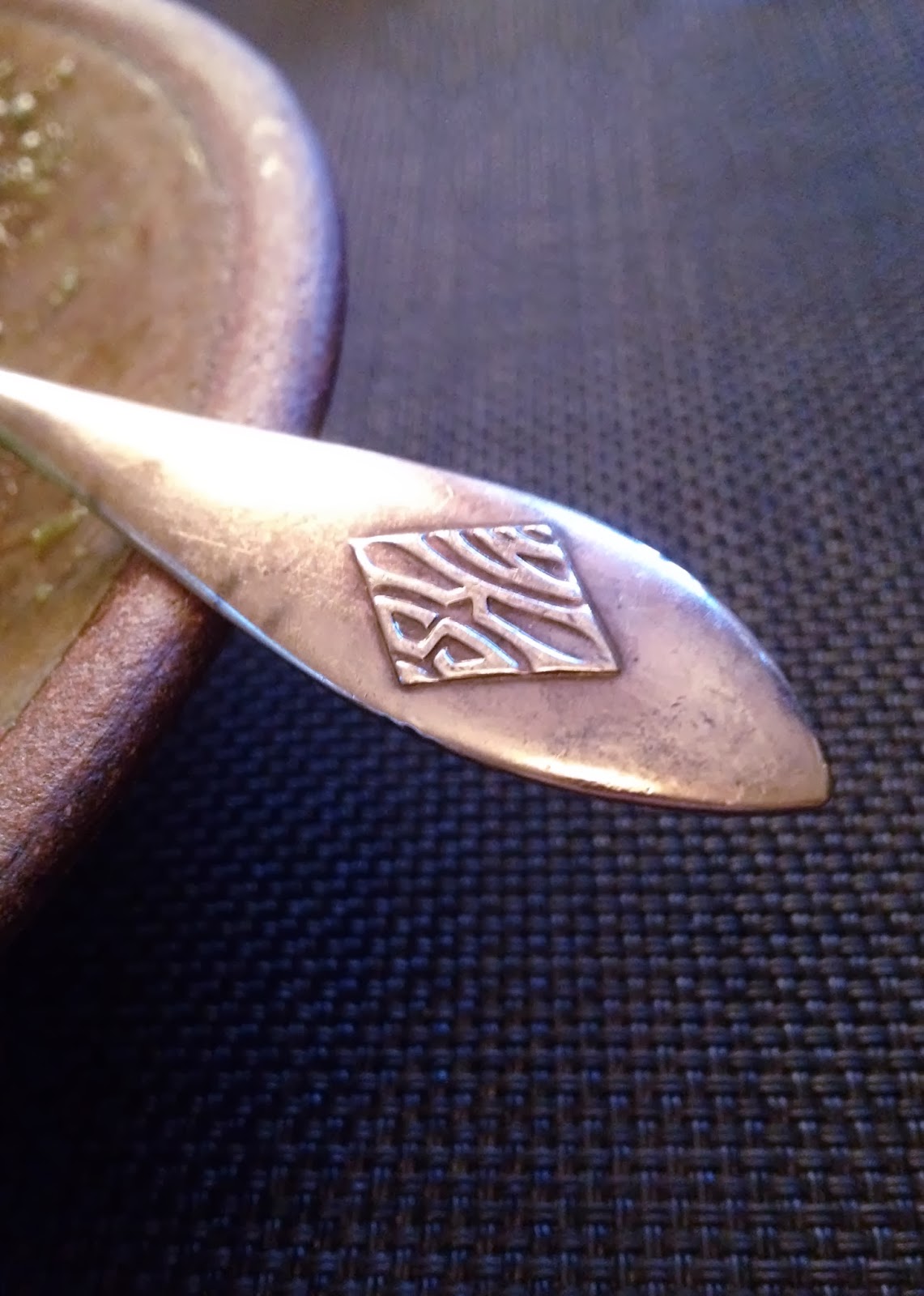
He joined the U.S.Coast Guard when War was declared and there met my mother (who was also a Coast Guard officer.) They both got out when the war ended and he worked for about 3 years as an advertising copywriter. It was enough. New York didn't offer the life he wanted. He/we went back to sea and we commenced our lives, moving from place to place as a military family. All that remains of grandfather Albert is an incomplete set of ornate demitasse cups and saucers and the bespoke silver service you can see at the top of my blog posts.


We ended up eating a lot of horse chili. Like venison, which is also dry, it needs moisture and time to become tender enough to enjoy. Spice doesn't hurt either. That was it though, I've had no horse meat (knowingly) since 1952.

Nowadays, we still love chili, particularly when it's bitter outside. And we think it needs corn bread and a green salad with a dairy dressing of some kind.

Mother used canned beans, ground meat and a bit less spice than I do but it was, and is, always a meal that was familiar, homey and warming. She made her chili in Puerto Rico, both Washingtons, Hawaii, Connecticut and so on. I prefer to cook up dried beans with a cheap cut of meat, fatty but trimmed, cubes of beef or lamb, but any game, poultry, substantial mushrooms, tvp, etc. would work except seafood which doesn't like to be cooked for a long time. 

First, cook your beans                                    brigid burns
First those beans: they must be cooked until you can easily crush them against the roof of your mouth with your tongue. I don't over-flavor them, an onion, a couple of whole garlic cloves, a very small piece of lean fresh or cured pork. A mostly naked ham bone is ideal. Maybe a bay leaf. I simmer them slowly until creamy. Depending on the age of the beans, which I never know, it will be from one to three hours. Most beans will do although lima bean chili just seems wrong.


brown the meat first, then add the onions


Sear the meat thoroughly, being careful not to burn the delicious browned layer that forms on the bottom (called the fond [French for 'foundation'.]) Do the meat first and then add lots of chopped onions and garlic. Season lightly each time an ingredient is added. If you are doing a vegetable version, toss the chopped onions very lightly in flour to make a kind of an onion roux. Begin to add a mix of dried, fresh or canned chilies as well as chile powder, paprika, cumin and oregano. When the onions are soft add enough liquid to scrape up and dissolve the good bits on the bottom. I have used water, beer or wine but, whatever I use, I watch the pan carefully and when the first liquid has cooked into the solids, I add a second liquid, preferably a rich stock but even lightly salted water will do in a pinch. It's a further distribution and deepening of all of the flavors.

Next, add tomatoes and begin tasting, I never know how much acidity and sweetness the tomatoes will bring. I am not interested in authentic Pedernales River Chili (Ladybird Johnson's recipe.) I'm more interested in the flavor profile that pleases Brigid. She has a sophisticated palate and it is her own: although she is from the mid-West her tastes were complicated by a 10 year immersion in New Orleans. After the tomatoes begin to break down, add the beans and as much of their cooking liquid as needed to make the chili a bit soupier than you like (knowing that it will thicken further.) Simmer slowly for an hour, continuing to taste and adjust. The things I use to balance the flavors vary but almost always includes soy sauce, honey or molasses, vinegar or lemon, red miso paste and the hot stuff of the moment (at this moment it happens to be the Korean chili paste, gochujang.) To truly finish the chili properly, let it cool down and age for overnight.

Our Chili, tonight's supper!

Remember, corn bread (I don't care for the sweet variety but serve it with butter and honey) and salad. Chili likes toppings: grated sharp cheddar, chopped raw onion, cilantro, parsley, sour cream, pico de gallo or guacamole all can be stirred in to good effect. I would say olé but the fact is that chili is not Mexican, it's more like American cowboy. In the 1800s, chili was made up and then dried in bricks to be reheated with water on the trail.

This is more a list of ingredients than a recipe, I believe that chili should be a personal expression...so saddle your own horse.

INGREDIENTS

1 pound of dried beans, cooked with an onion and 3 garlic cloves until creamy, when they are done, add salt and pepper.

1 pound of ground or cubed beef browned evenly.

1 pound of yellow onion, chopped and softened in the beef pot

1 pound (or a bit more) of good canned tomatoes, crushed

1 cup of beer, wine or seasoned water

1 cup of strong stock or bean cooking liquid

To taste: chiles, chili powder, cumin, paprika, oregano, salt and pepper.

Cheers,

Chris