Monday, February 17, 2014

We talked about our dogs (hi Laurey)

She has always been there

In my mountains, Laurey has always been a part of the view. When I came to Asheville to bake bread, Laurey patted the empty seat next door on Biltmore Ave. We thanked her at our home with dinner and my bread; she brought a strawberry cake that had beautiful, crisp, meringue layers and a generosity of whipped cream. She had understood immediately what I wanted to do here and knew that it would work.

So we opened Blue Moon Bakery next to her tiny kitchen and storefront at 60 Biltmore. She used her space to cook and to meet catering clients. She hoped our bakery cafe would thrive and helped to spread the word. 

Our first Thanksgiving celebration in Asheville was in that small storefront; she had cooked for the crowd. There were about 20 of us, friends, employees, family and neighbors. A kind of guest of honor was her nephew who traveled with a nurse. He had been very badly burned and could no longer care for himself, but he had Laurey's spirit and refused to quit. And Laurey taught all of us (or at least me) to fight back against the instinct to cringe with pity. She loved her nephew and wanted to share her friends with him and he with them. 

She had already dealt with round 1 of her cancer battle. She is tough, we all know that. I admired her grit and wanted some. But the real gift I have from Laurey has been the rewiring of my mind. I've always been too cool. The protective layer of cleverness, sophistication and sardonic wit are the tools I use to keep emotions in check. I have privately snorted at all of the repeated phrases that form the soundtrack of living in these mountains. Be here now, live and let live, one day at a time, you doin' all right? 'preciate you?, have a blessed day and, worst of all,..Don't Postpone Joy.

I thought (again, to myself), what the hell does that mean? It's just a cute way of saying, "buy more of my food." A Chamber of Commerce slogan and something to embroider on a pillow. A bumper sticker and I never use bumper stickers, what could be less cool than a bumper sticker? I have always been a land snark. I almost feel apologetic for all of my cynicism. Almost. And it would have to be an apology to myself.

Of course that hasn't lasted, I've softened. I've mellowed for a lot of reasons but the greatest piece of it has been because I've directly witnessed and experienced so many expressions of love in the 22 years that I have been here. There have been many, many powerful examples of heroic living. As I think of friends who are gone and all of us who have come close, I see that I am changed. I no longer have time to be cynical. For myself and for everyone that I can touch I need to thank Laurey for her demand that we generate positive thought and choose joy.

The last time we talked, in late January, it was about the amazing the love of our dogs . How they sit next to us and press their warmth into us when we are not well. They are incapable of negativity. I hope her dog is with her now.

Thank you Laurey

Chris


Friday, February 14, 2014

After all the snow it's Fårikål for me


It is gorgeous outside. Asheville is always beautiful with a few inches of snow.

Buttermilk Creek                                     brigid burns


We seem to get a big snow every few years. My first Asheville blizzard was 20 years ago. The family lived on the Manor grounds. The Manor began as a fin de siecle mountain inn on Charlotte Ave. with cottages (each with a name: Cleo, Dogwood, Possum Trot) that wend up the steep base of Town Mountain. To approach our house, we had to cross a wooden bridge with stone abutments. "Wildfell" had seven floors with one or two small rooms on each level. There was a porch with tree trunks as supporting pillars. The whole neighborhood is a virtual museum of charming, antique architectural styles.


I had Blue Moon Bakery then and had been kept away for a full day by the snow. When I finally got there by walking and sledding, it was a mess. The doughs had overproofed, spilled out of the tubs and was stuck to the floor. It took me a couple of hours to clean up. It was depressing but I took the time to mix a fresh batch of country French bread.


After baking the bread, I filled some cardboard boxes and tied them to the sled. As I hauled the sled home, everyone I passed got a warm loaf. It was a wonderful moment for me. I had become the village baker.


Now, Brigid, Mookie and I live in a west Asheville neighborhood. It was developed in the 1920's as Horney Heights (revisionists want to say hor-nay, but we know better...we are the 'hor-nee haytians.') Mary, who lives across the street, was raised in the area and has seen most of the population turn over. Lots of dogs, children, and grownups with Subarus and kayaks.


repurposed kayak                             brigid burns

Since I was under the weather I spent the storm indoors. Dosed with Dayquil and ginger tea I slept away a good part of two days. I would get up from time to time and peer out at the fun, sad that I couldn't join but feeling the happy vibe.


home                                                     brigid burns

We have developed a tradition with our good friends, Martin and Leah. Whenever there is real snow on the ground we get together to share food and warmth. Last night, as I huddled under


the covers. Brigid and Mookie trudged around the corner for a sweet time. Martin had made a spinach lasagna and there was whiskey. Later I heard voices and looked out to see Martin shoveling a path to our backdoor. They brought me a square of the lasagna and went back to their fire. I helped dry the dog as B described the snow scene.
                                                                                                      brigid burns


A good crowd had gathered at the top of Harris St. to celebrate and sled. Cheryl had built a bonfire and there was every imaginable sliding device; no cars and the dogs ran free. Mookie is pretty small and has to hop to get anywhere in the deep snow. When everyone was warm (and I was full) all three of us went back upstairs to cuddle and watch a good movie on Netflix.


(so what is Fårikål?)


Knowing the snow was on the way I had prepared for the cold by making Fårikål, the Norwegian national dish. Simplicity itself: 4 lbs of lamb chunks layered with three lbs of cabbage wedges, a handful of black peppercorns, salt and water. Put it on the back burner and let it simmer for a few hours, it cannot be overcooked and the flavor is better each time it's reheated. After a couple of days of cooling and warming the meat falls into soft shreds and the cabbage turns into a broth. I expect it to restore me to health in a day or two. Today, we've eaten it twice.


Cheers,

Chris


Wednesday, February 5, 2014

FAKE SAUCE (sugo di scapatto, sort of)

I spent December, 1971 in Rome, visiting a girlfriend from Philadelphia. She was enrolled in a junior-year-abroad and I had spent the first of two years on a Scottish island writing poetry, drinking and smoking dope; getting over a war. It was just as cold and wet in the Eternal City and very crowded with Christmas shoppers. Some of the piazzas were ringed with green plywood booths selling celebration foods; I particularly remember enormous slabs of chocolate and nougat.

Timing is everything. In the midst of our romantic month, her parents flew in for a surprise visit. Her father, a psychiatrist, had gone to medical school in the Eternal City. We had to make arrangements to reassure him of the security of her virtue. The arrangements, of course, were rearrangements. More specifically, I was to stay out of sight except when I was specifically  invited. They needed a lot of family time. Whether or not he knew what we were up to, he certainly knew the city well and very kindly included me for a few of their outings.

On the days when I was not included I felt very sorry for myself and wandered the damp and windy city with a small cassette player listening to "After the Gold Rush"; both the rain and Neal Young's whiny voice provided the perfect soundtrack for my misery. But what a place to be miserable: I kept returning to the Capitoline hill, overlooking the Forum. I think that there were orange trees with fruit. In Rome with Christmas approaching. Enjoying my Roman Holiday.

Luigi
When I did join them it was for meals that are still vivid in my memory. One day we went to a place outside of the city. I can't remember why, but I was the designated driver of the rental car. Driving in Rome during the evening rush was the third most terrifying experience of my life; at one point we were stopped for a light and on the curb was an actual one-eyed cat staring at me, very tough looking. There is an entire feral cat culture in the ruins throughout the city. I felt the scorn.


We arrived at the restaurant which was deep in an ancient cellar. There was no menu but they gave us everything. First, an aperitivo, wine, then a platter of cured meats and cheeses, wine, then a vat of spaghetti with a plain but perfect marinara, wine, then a huge assortment of grilled meats: beef steak, pork chops and both beef and pork liver, various sausages and chicken, wine, then (for those still able) a salad, wine, and finally, a digestivo. Everything was perfectly delicious. The meal, which went on for hours eclipsed my nervousness and on the way back to Rome, I drove like an Italian.

I won't  describe my other meals except to say that I found a different experience of food than I had known. In fact, although it took decades for it to sink in, the foundations of my culinary identity were being laid. The first principle of this identity is, "Everyone should be able to eat like a Roman." Food is simply much more important to the Italian than to the American.

In the end, on New Year's Eve, I shared a train compartment with a young German I had met. I was headed through Switzerland and across France to Calais and the ferry to Dover. My friend was only going across the Swiss border under a deportation order because of his day job. He drove luxury cars  to the market in Istanbul. As it happened, his employer did not own these cars.

Outside of the hamburger, nothing comforts me as completely as pasta in almost any form. Eaten for at least 4,000 years with western literary references from BCE Greece. The earliest record of boiled pasta is in the Talmud but people had been eating forms in China much earlier. There are so many different theories about how pasta might have been introduced from one culture to another that I have to conclude that it arose, independently, everywhere that grain was milled (or, in fact, where any starch was consumed).

4,000 year-old noodles with Chinese dirt


I love all varieties of pasta, although not equally, from Vietnamese glass noodles made from canna lily starch to Mueller's elbows made from bleached, bromated, "enriched" and extruded wheat flour. I like it stuffed, in broth, fried into rangoons, baked in lasagna (and even the baked spaghetti at the S&W cafeteria), boiled and tossed with butter and black pepper, boiled and then sauteed, or pushed through a ricer into a simmering stew as spaetzle.


Sometimes we just want pasta with red sauce and what follows is my approach. The sauce I make is based on a recipe by Giovanni Bugialli, a great chef and writer who inspired me through the 1980's. His intention was Sugo di Scapatto, meat sauce from which the meat has escaped. The sauce is normally meatless, hence the name. An alternate meaning is "fake sauce" because it is often a meat sauce without the meat. His version included veal stock. The one I made yesterday included ground beef simply because we had some in the fridge. His sauce was a revelation to me and the techniques I learned form the basis for a great number of my dishes.


red sauce ingredients                    brigid burns


My approach depends on a soffritto or a mirepoix, a seasoned vegetable mix: celery and onion and garlic . I add parsely and carrots (which is a bit Frenchy) for their sweetness. I think the size of the chop is important and for this sauce, I like a mince, which is pretty small (see below). For other dishes I might want these ingredients to remain separate and cut them into chunks. 

This time I began by cooking ground beef until all of the pink was gone. As it cooked, I broke the meat into the smallest pieces I could by stabbing it over and over with a wooden spoon. When the meat had all gone brown I added the soffritto, seasoned it lightly with salt and pepper, and cooked it slowly for about a half hour until all of the vegetables were soft and brown, If it seems that the sauce is too dry and might burn, a splash of water slows everything down.


Next, I added a glass of red wine (enough to lift the solids into a shallow soup) and cooked the mix slowly until it absorbed the liquid and had become almost dry again. Then I added an equal amount, or more of stock (in this case, a mix of veal and beef stocks). If you haven't got any of your own, the next best thing is to get 2 quarts of an organic stock and reduce it to one. It will cook for quite a while so there is no need to reduce it in advance. As the stock simmers into the mixture, add the seasoning that you choose. In this case I used a mix of oregano, marjoram and red pepper flakes.

When the stock had also been absorbed I added a large (28 oz.) can of the best tomatoes I could find. I prefer the whole peeled variety although you can use crushed or "chefs cut" if you wish.  I pour the juice into the pot and squeeze the tomatoes through my fingers. Now it is time to begin tasting for balance. This batch needed quite a bit of adjustment as the tomatoes were a little flat: I used lemon juice to raise the tartness, soy sauce for umami, or savory roundness, honey to balance the tart, heat from the pepper and just enough salt to bloom the flavors. It shouldn't actually taste salty, but the right amount opens your palate to the full savoriness of a dish.

From this point it is all about personal taste, tune it until you like it. Then it is time and low heat until all the flavors meld. It improves with an overnight rest. When you reheat the sauce taste it again until it pleases you. This works well with most pasta shapes, I like it with bucatini for a long pasta and penne rigate for a short  version.
Dinner        by brigid burns

Heat the sauce in a large frying pan while the pasta is cooking in a separate pot of salted water. When it is done, net it out with a spider, a skimmer or a slotted spoon into the sauce and turn it over and over to coat the pasta. If necessary, use a ladle of pasta water to thin a sauce that has become too thick.

Mange, mange!

Cheers,

Chris

Tuesday, January 28, 2014

We ate horse meat for a year


In 1951, the Coast Guard sent my father to Stanford for graduate work in personnel administration. We lived in Palo Alto which sits between the the headwaters of San Francisco Bay and the Pacific. I was 5 and have only disconnected memories...mostly about fruit which was everywhere: apricots, those black plums that are dried into prunes, avocados, sweet, crunchy figs and lots of yellow jackets.


And then there was the horse meat. The family took part in a dietary experiment for a year. Maybe we were supplied the meat. Our assignment was to have a number of meals each week based around "viande de cheval". I have foggy but definite memories of family discussions about the horse meat. As I recall, we thought it was just ok; kind of dry and tough because it's so lean. We were all kind of adventurous, food-wise but it was my father who had the experience. He had eaten horse meat as a boy during summers in France. 


not my grandfather
Jason, my father, was raised in a kind of 19th century style by a French governess in New York...his first language was hers. He and his brother, John, saw their father Albert J. Kobler, only at breakfast. It was boarding schools and France each year. It all sounds lavish, and I guess it was; peopled with very fancy bridge partners including the Aga Khan, William Randolph Hearst and Walter Winchell. Grandfather Albert died well before I was born and Father never said much about his Park Ave. youth and, sadly, I was incurious. However, his experiences gave him a love and knowledge of French food (including horse meat.)


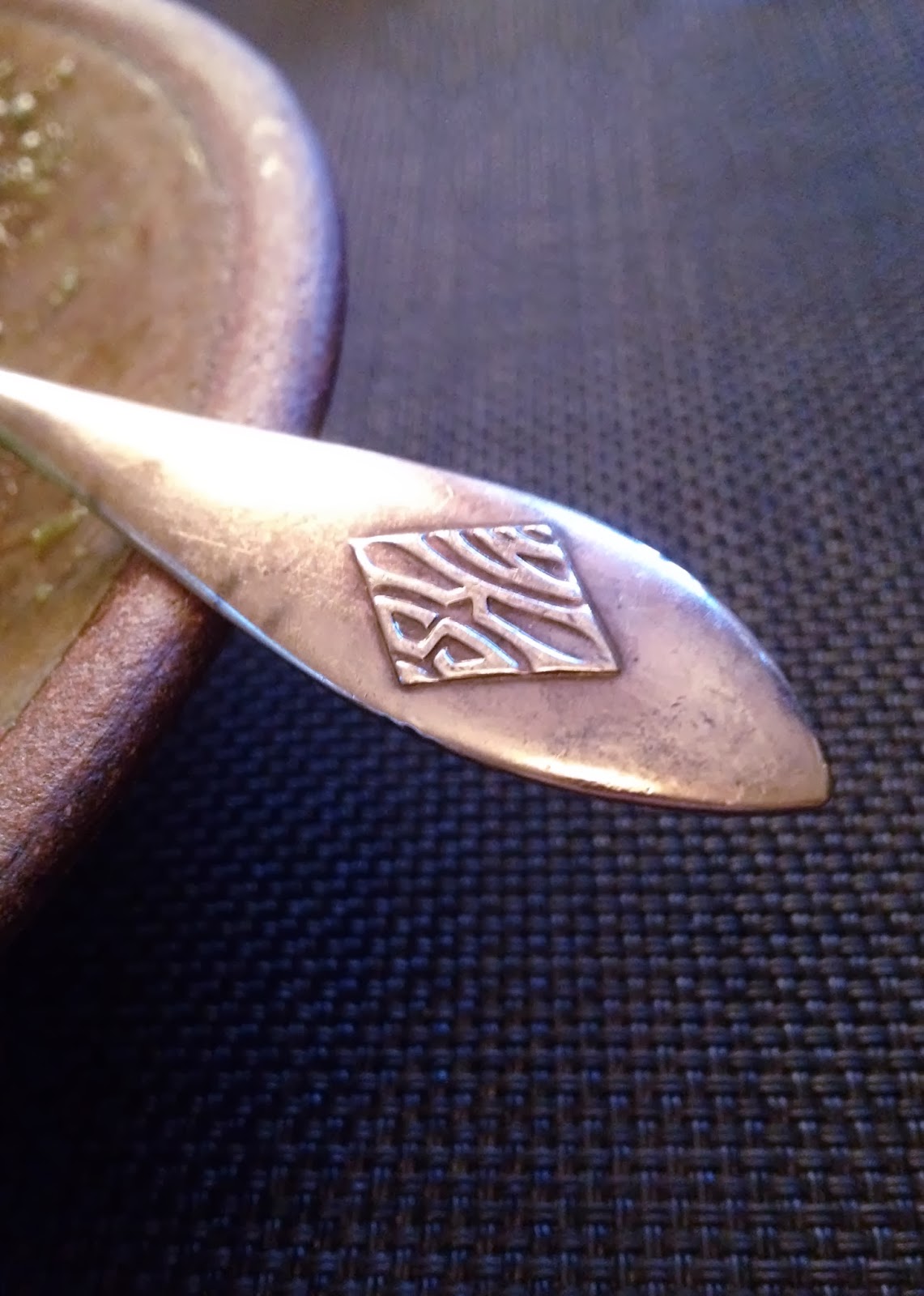
He joined the U.S.Coast Guard when War was declared and there met my mother (who was also a Coast Guard officer.) They both got out when the war ended and he worked for about 3 years as an advertising copywriter. It was enough. New York didn't offer the life he wanted. He/we went back to sea and we commenced our lives, moving from place to place as a military family. All that remains of grandfather Albert is an incomplete set of ornate demitasse cups and saucers and the bespoke silver service you can see at the top of my blog posts.


We ended up eating a lot of horse chili. Like venison, which is also dry, it needs moisture and time to become tender enough to enjoy. Spice doesn't hurt either. That was it though, I've had no horse meat (knowingly) since 1952.

Nowadays, we still love chili, particularly when it's bitter outside. And we think it needs corn bread and a green salad with a dairy dressing of some kind.

Mother used canned beans, ground meat and a bit less spice than I do but it was, and is, always a meal that was familiar, homey and warming. She made her chili in Puerto Rico, both Washingtons, Hawaii, Connecticut and so on. I prefer to cook up dried beans with a cheap cut of meat, fatty but trimmed, cubes of beef or lamb, but any game, poultry, substantial mushrooms, tvp, etc. would work except seafood which doesn't like to be cooked for a long time. 

First, cook your beans                                    brigid burns
First those beans: they must be cooked until you can easily crush them against the roof of your mouth with your tongue. I don't over-flavor them, an onion, a couple of whole garlic cloves, a very small piece of lean fresh or cured pork. A mostly naked ham bone is ideal. Maybe a bay leaf. I simmer them slowly until creamy. Depending on the age of the beans, which I never know, it will be from one to three hours. Most beans will do although lima bean chili just seems wrong.


brown the meat first, then add the onions


Sear the meat thoroughly, being careful not to burn the delicious browned layer that forms on the bottom (called the fond [French for 'foundation'.]) Do the meat first and then add lots of chopped onions and garlic. Season lightly each time an ingredient is added. If you are doing a vegetable version, toss the chopped onions very lightly in flour to make a kind of an onion roux. Begin to add a mix of dried, fresh or canned chilies as well as chile powder, paprika, cumin and oregano. When the onions are soft add enough liquid to scrape up and dissolve the good bits on the bottom. I have used water, beer or wine but, whatever I use, I watch the pan carefully and when the first liquid has cooked into the solids, I add a second liquid, preferably a rich stock but even lightly salted water will do in a pinch. It's a further distribution and deepening of all of the flavors.

Next, add tomatoes and begin tasting, I never know how much acidity and sweetness the tomatoes will bring. I am not interested in authentic Pedernales River Chili (Ladybird Johnson's recipe.) I'm more interested in the flavor profile that pleases Brigid. She has a sophisticated palate and it is her own: although she is from the mid-West her tastes were complicated by a 10 year immersion in New Orleans. After the tomatoes begin to break down, add the beans and as much of their cooking liquid as needed to make the chili a bit soupier than you like (knowing that it will thicken further.) Simmer slowly for an hour, continuing to taste and adjust. The things I use to balance the flavors vary but almost always includes soy sauce, honey or molasses, vinegar or lemon, red miso paste and the hot stuff of the moment (at this moment it happens to be the Korean chili paste, gochujang.) To truly finish the chili properly, let it cool down and age for overnight.

Our Chili, tonight's supper!

Remember, corn bread (I don't care for the sweet variety but serve it with butter and honey) and salad. Chili likes toppings: grated sharp cheddar, chopped raw onion, cilantro, parsley, sour cream, pico de gallo or guacamole all can be stirred in to good effect. I would say olé but the fact is that chili is not Mexican, it's more like American cowboy. In the 1800s, chili was made up and then dried in bricks to be reheated with water on the trail.

This is more a list of ingredients than a recipe, I believe that chili should be a personal expression...so saddle your own horse.

INGREDIENTS

1 pound of dried beans, cooked with an onion and 3 garlic cloves until creamy, when they are done, add salt and pepper.

1 pound of ground or cubed beef browned evenly.

1 pound of yellow onion, chopped and softened in the beef pot

1 pound (or a bit more) of good canned tomatoes, crushed

1 cup of beer, wine or seasoned water

1 cup of strong stock or bean cooking liquid

To taste: chiles, chili powder, cumin, paprika, oregano, salt and pepper.

Cheers,

Chris


Sunday, January 19, 2014

Baked Asheville (with pork candy)


Asheville is surrounded by very old mountains.


We have wildflowers.


We have waterfalls.


We also have lots of restaurants and a rocketing food culture. Big time. James Beard nominees and finalists. Articles popping up everywhere, a couple hundred food blogs (maybe a couple hundred and one.) The choices for dining out have grown hugely (especially if you like pork.) There's even a recently published history of Asheville's particular cuisine: Asheville Food: A History of High Country Cuisine (which I have not yet read). We have glamorous chefs and bakers, we have bad boy chefs, we have wondrously myopic food artisans. I can't imagine that anything more needs to be said about our bursting barrel of breweries but we also have distilleries and cideries.

mountain food culture, old school (Brigid Burns)

May I suggest that things have changed? I have been working in the Asheville food world for over 20 years. When we moved here in 1991, there was good dining at the Marketplace and The Richmond Hill Inn... also...um... the Grove Park Inn. There were mainstream American bakeries, lots of yeast and pillowy breads. We had Frank's Roman Pizza and lots of diners with Greek names. Asheville still has deep affection for the Mediterranean Restaurant that has been an institution since 1969.

We shopped at Ingles, Harris Teeter, the Fresh Market, Bi-Lo and Food Lion, Dinner for the Earth (now, of course, Earthfare) the French Broad Food Coop and a single tailgate market. Now we have updated versions of most of these as well as newish players in Green Life (Whole Foods, the behemoth), Trader Joe's (eliminating the last reason to envy Greenville, SC), and TJ's estranged brother Aldi,Amazing Savings, Katuwah and a sprinkling of mostly Mexican Tiendas. For anything exotic we have Kim's Oriental, Foreign Affairs and several other ethnic shops. At last, one does not have to make one's own pelmeni, Siberian style stuffed pasta (or worse, to try and substitute tortellini [as if they can't tell the difference]).

Our resources are now nearly complete, whether or not you care for the package in which a particular element arrives. Nearly everything one could need is available to cook (or raw) and serve literally anything you wish. Fresh galangal, candlenut, jaggery or gulub jawa, Thai peppers, long beans and bitter melon, both gochujang and gochugaru...all available! A vibrant community of local farms brings stunning produce to the tailgates. I am still surprised every year to be able to find purslane, lamb neck, honey, sugar plums and tatsoi along with foraged nettles. morels and ramps. We even get descent seafood driven up from the coast.

We even found our constant companion at the City Market in the Public Works parking lot. You need to be careful. The Humane Society or Brother Wolf often have booths offering the irresistible.


                                  Mookie                     brigid burns

The artisan food community is growing rapidly. We have locally made miso, cheeses, smoked, cured and fresh meats, superb chocolates, preserves, heirloom grains milled into meals and flours. And bakeries? Funny you should ask, we do have many bakeries for every taste and requirement but there's more. Here is the true story about how I got to Asheville in the first place:

We parked behind a strip of shops on the corner of Massachusetts and Nebraska Avenues in northwest DC. to shop at great bakery, Marvelous Market in case you were there. I got out of the car and noticed a van with these words painted on its side... French Baking Machines. It was a moment...I dropped everything I was in order to be someone completely different and, as it turned out, very much more my self. My former wife Margaret was in on the epiphany, she shared my need to start feeding people. Up until that moment I worked for the US Small Business Administration, after that moment I was a bread baker.

I was 45 when I made that hairpin turn. I got a business card from the disdainful French driver/technician. He doubted I could learn to make real bread. It must be in ze blood. Well... apparently it is. It never occurred to me that I might not have it in me or that I might be "tone-deaf" to bread. I had fallen in love with the idea of baking. In short order the idea became the life. I called the boss at headquarters in New Jersey and proposed to buy one of his ovens if he would put me together with the best baker he knew.

I followed up with the oven man who sent me to Dan Leader, owner of Bread Alone, 100 miles north of Manhattan (my home town). We agreed on a fee and he became my sensei. He took me from that moment (not knowing how to bake bread) until two weeks after Blue Moon Bakery was open and running. I spent a couple of months learning and doing everything that could be done in Dan's bakery. Margaret (who had visited as a child from her native Kentucky) picked Asheville as a good place to try and we never looked back. We met Laurey Masterton who persuaded us to move in next to her shop in the building on Biltmore Avenue (the spot where City Bakery is now.)

So we packed up our daughters, Nora and Emily, and drove to our new home. From the moment we opened our doors the city welcomed our family and our bread.

I found the knack to make artisan breads (and then made the breads 10.000 times as Hank says one must in order to become good at something.) Ashevilleans found that they loved those breads. Blue Moon was the first such in Asheville (and I think the first in the state, maybe the whole South.) The bakery was just a bit ahead of the curve when I started the boules rolling 22 years ago. This coming March (2014) will be the 10th annual Asheville Artisan Bread Festival founded and nurtured by Steve Bardwell and his wife, Gail Lundsford of Wake Robin Farm Breads. (For festival news and schedule http://www.ashevillebreadfestival.com/.)

I am still here, baking less and cooking more. We are here, Brigid, Mookie and me; we still love the mountains, wildflowers and waterfalls, the glorious cooks and foods of Asheville and each other. Bon Appetit!


Cheers,

Chris


Sunday, January 12, 2014

Indulgence (it's a good thing)


Dagwood Bumstead cared for only 3 things

My list is longer than his but our top three are nearly identical. Eating, sleeping and Blondie (although my Blondie has silver and black hair and is never publicly ditzy.) The devoted pursuit of these goals throughout one's life might be interpreted as cardinal sins.  I don't care. I fully intend to keep it up.


Of course gluttony needs balance...just not repudiation. I hold this to be true for all of the "sins" that harm no one. They should not be avoided; rather, they should be perfected. Some folks base their lives on love, or obedience, or law. My animating center is the pleasure principle. I realize, of course, this is everyone's core drive, even yours. I choose not to fight it. For your sake and mine, DON'T GET ME STARTED!

Any effort spent seeking pleasure for oneself or others is worthwhile. Don't take my word for it...from a little ditty that was sung to Tutankhamen and his court:

god this was good
Let thy desire flourish,
In order to let thy heart forget the beatifications for thee.
Follow thy desire, as long as thou shalt live.
Put myrrh upon thy head and clothing of fine linen upon thee,
Being anointed with genuine marvels of the gods' property.
Set an increase to thy good things...


Back to Dagwood and gluttony. I make room in my life for overeating. It offers a distinct pleasure in its own category. Like the pleasure of quenched thirst; the taste of coffee in the morning, the perfect crunch of a perfect croissant, occasionally eating too much is on the joyful side of the spectrum. I am not trying to persuade anyone of this truth, It is self evident.

To be absolutely truthful, I indulge this desire infrequently and I level things out with short term fasting. Everyone knows the I-would-eat-the-whole-thing-if-I-could feeling. From time to time I simply indulge that desire. Privately. Usually around midnight. A whole bag of cookies. A whole pint of ice cream. A dozen chocolate truffles. Or, like Dagwood, a serious sandwich.


this only looks like a crime scene, it was a glorious burger

Eating something wonderful can be an excellent way to balance too much moderation, the over disciplined life. We all know someone who never, ever gives in to impulse or indulgence. It's just so sad.

this cake made my fridge happy

The failure to indulge one's self from time to time is a serious character flaw. A primary cause of hypertension. Care for an extra meal? Yes, thank you: rich beef stew on toast, half of a of strawberry cake, seven or eight poppy seed and honey hammentaschen.

A Jewish gift to the world

Maybe I'll just break off a lunch plate sized piece of hazelnut brittle.

if you add chocolate and grind it all up, homemade Nutella

It is good to have extravagant moments. What I mean to say is that I give and have the most fun in the space beyond needs. Just enough is not enough. If ever I were to get a tattoo... 


Cheers,

Chris

Wednesday, January 8, 2014

Milking the Tangerine (one more time)


So, they weren't tangerines after all.  The beautiful candied tangerines I've made are actually beautiful candied calamondins. My alert Sisinlaw determined the truth, packed a box full of the little devils and sent them to me in the literally frozen north South. I know we are in the mountains, but, trust me, 3 below 0 is News in North Carolina.


calamondin flower


They are like kumquats in that the skin is the sweet part. You can use the juice in the way and in the same quantity as you would lemon or lime. And they make a spectacular marmalade which I finished yesterday; truly, this is the easiest preserve I've ever made. Modest tedium. Modest equipment, a candy thermometer is helpful. A pot, some sugar and water. To wit:


1. Be sure they are pesticide free and wash the fruit thoroughly. Remove the stems completely and, working over a pot (avoid aluminum or unseasoned iron, I use enameled iron) slice them in half and squeeze the juice through a strainer to save all of the juice and none of the seeds. It's a mild struggle to get them all out but the ones you miss will appear later as you cook the marmalade. It is either infuriating or calming to dip the bitter seeds out at that point. 

Now, the fruit can be chopped but I find that I lose too much juice and I leave it in halves until later.

2.  Add enough water to cover the fruit and juice. Move the pot to the stove and bring it to a boil. Maintain a low boil for 20 minutes and remove from the heat, cool and then refrigerate over night to coax out most of the natural gelling agent, pectin.

3. The next day, measure the mixture and set aside an equal amount of sugar. This is a general rule of thumb when making jams, one to one, fruit to sugar. Bring to a rolling boil and gradually add the sugar, stirring until you are satisfied that it is dissolved. Continue to cook until the thermometer reads 220 degrees. It will take about a half hour and it does need to be watched. As the temperature slowly rose, I stood over the pot with a pair of scissors and snipped the fruit into small pieces. Be careful, it can stick to your skin and burn like napalm. After it's cooled enough to handle, carefully spoon it into sterilized jars.

brigid burns


I want to keep some of these jars for a long time and so I processed them. With fresh lids tightly screwed down I placed the jars in a pot covered by an inch of water. They boiled for ten minutes and I cooled the jars in the water.

You don't really need to process marmalade, just refrigerate it. As it happens, there is no space in my fridge so I'll store these in my "pantry". We have everything here except space. At any rate this is so tasty I'd rather not run out.


On a final note, I notice that my blog is dominated by a single color and I do not want to come across as a monochromaniac. It's just not me. And so, I hereby pledge to avoid the color orange (except for a piece of carrot) for the next three posts. For the moment, black is the new orange.

Cheers,

Chris